
Get Healthy!
- Posted March 30, 2026
What Makes Play Fun For Children? Seven Factors Stand Out, Study Says
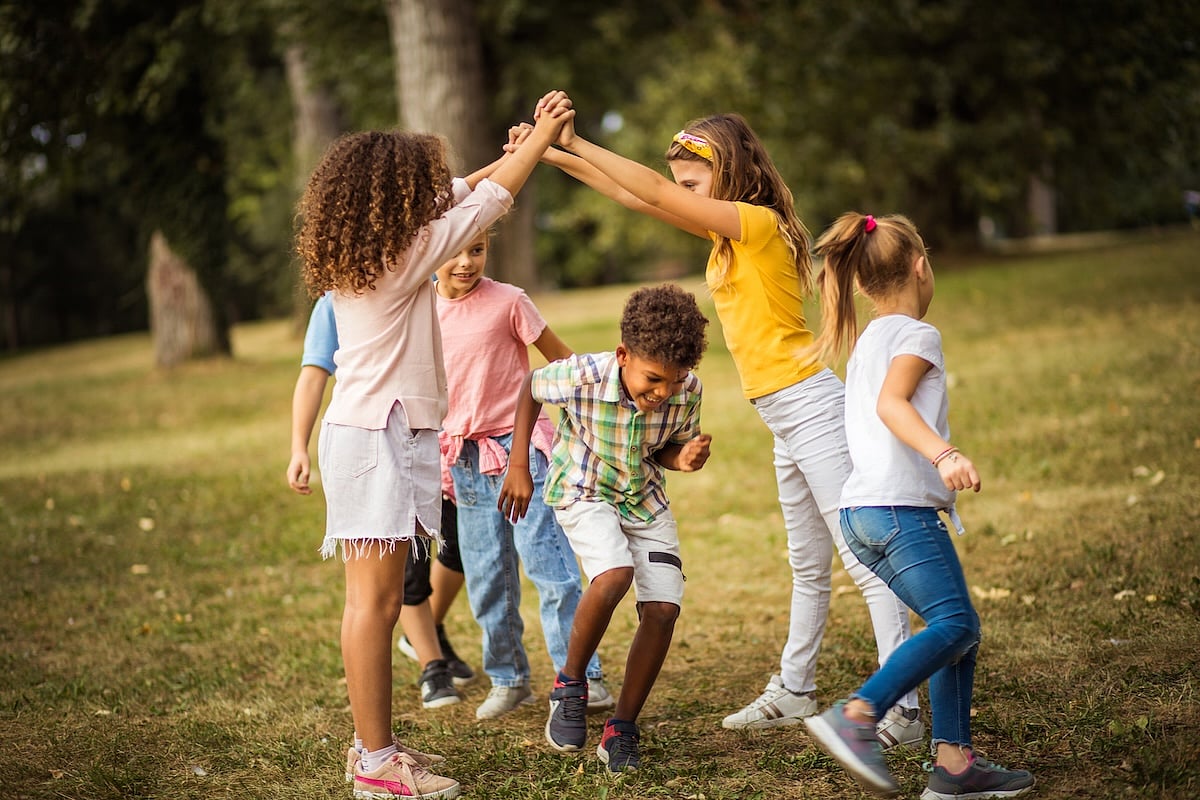
What makes it fun for a group of kids to play together, and what might make it a drag?
Seven critical factors appear to guide whether kids will find a play experience enjoyable or intolerable, according to a new study published in Frontiers in Psychology.
Even though different kids like different things, these seven factors appear to directly influence whether they’ll find an experience fun, researchers said.
Being included in a group, using imagination, a wild and exciting atmosphere, having something to do, a sense of silliness or transgression, and achievable goals or challenges are among the factors important to kids’ play, researchers found.
So too is a mysterious seventh factor that researchers dubbed “play feeling,” which had the most to do with whether something was fun or not.
“If you have ever felt it, you know what it means -- you know it when you see it, like love, evil or fun,” said lead researcher Andreas Lieberoth, an associate professor of education at Aarhus University in Denmark.
“In the words of kids, it’s an experience where you feel that's ‘just totally perfect,’ and maybe you ‘just laugh’ or ‘get a smile on your mouth.’ When the feeling is not there, play is 'annoying,’ 'boring’ or maybe you ‘think the rules should be different’,” Lieberoth said in a news release.
For the new study, researchers interviewed 104 children about play and identified a set of recurring elements that made play bad or good.
The team then surveyed another 504 children to hone down that list, asking kids to compare those elements against earlier play experiences that were either good or bad.
Two of the factors -- achievable challenges and a sense of play -- were usually present in good play, researchers found. The other five factors could be present in either good or bad play.
For example, the transgression factor meant that good play experiences for kids might make adults’ hair stand on end, researchers noted.
“In many cases, good play will have no transgression,” Lieberoth said. “But in some cases, what really makes play fun and special is the ability to go nuts, tease each other and generally flout the norms of society -- or the playground.”
Adults can also ruin things by trying to force kids to play together, which runs counter to the social inclusion factor, researchers found.
Kids have fun when they feel included and don’t when they feel excluded, researchers said. Shoving a child into an ongoing game won’t help matters.
“Some of the factors we discovered showed the anti-play kryptonite many of us can recognize from childhood or painfully awkward team-building exercises,” Lieberoth said.
“I have seen many well-intentioned adults try to interject a hapless kid into someone else’s game, basically ruining the shared alignment,” he said. “Sometimes an adult is needed to scaffold, initiate, inspire and support, but sometimes they should shut up and go away.”
Lieberoth hopes the new study will help adults nurture different sorts of play among children.
“Perhaps we have made the first steps to describing the magic and intangible thing we call play in a very new way,” he said.
At the same time, the researchers cautioned against adults using these results to butt in when kids are playing.
Instead, children should be offered larger-scale play opportunities in which they can choose different games or activities, to increase the odds that every kid will wind up being included.
“Adults should stop explaining to children how they ought to play, and put faith in children’s ability to work things out,” researcher Hanne Hede Jørgensen said in a news release. She’s an associate professor of education at VIA University College in Denmark.
“We don’t make space for either good or bad play -- and we must make space for both, because good play to one child might be bad to another,” Jørgensen said.
Bottom line?
“The last thing we want is for people to use this work to make up rules for ‘correct play.’ There is no such thing,” Lieberoth said.
“I’m convinced that the same protocol would yield different stories, different memories and different agreements in a different time and place,” he said. “But within the dataset the findings appear quite robust across many kids, so it could be that some features are indeed universal. I would be very excited to see the scales used in different settings.”
The findings were published on March 26.
More information
The Child Mind Institute has more on healthy play among children.
SOURCE: Frontiers, news release, March 27, 2026


